Case study
Running a Bike Hire Shop With a Skeleton Crew
How Waterside Bike Hire, one of North Devon's busiest hire venues, runs day-to-day on a lean team backed by Zippy Booking and Dan OS — from someone actually running it.
Waterside Bike Hire · Zippy Booking · Dan OS
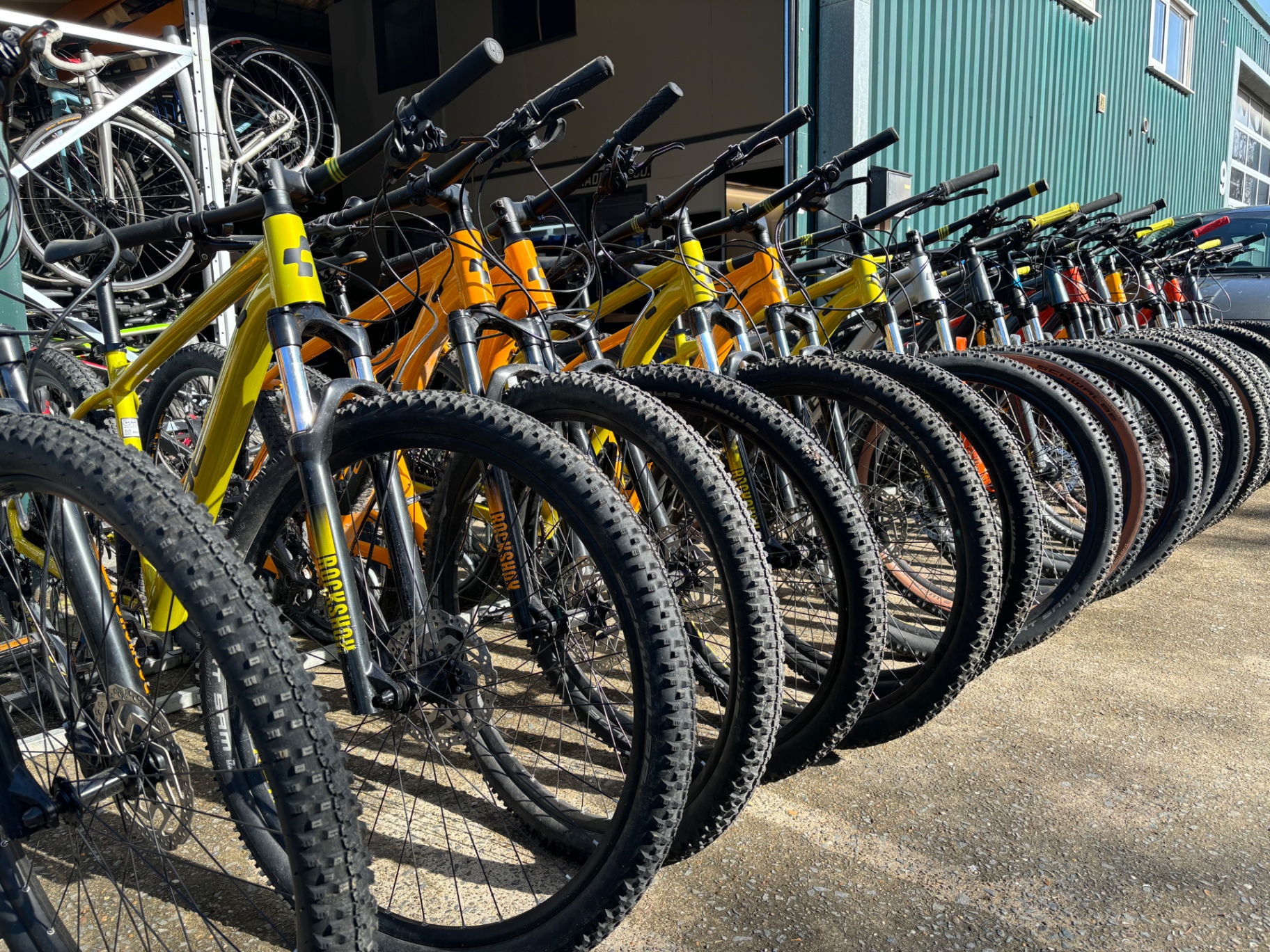
Waterside Bike Hire is one of North Devon's busiest hire venues, run day-to-day by a core team that would look thin on paper. That's not an accident — it's two systems doing the work that would otherwise need someone standing around on the slow days. Here's the actual setup, from someone running it.
The problem with bike hire staffing
Bike hire is weather-dependent in a way most retail isn't. Some days you're rushed off your feet; some days a forecast alone means nobody comes in at all. If your staffing is built around your busiest days, you're paying two or three people to stand around on the days that don't happen — and in a low-margin, seasonal business, that cost adds up fast.
The fix isn't fewer staff for the sake of it — it's a system that lets a small core team do everything that used to need more hands: taking bookings, handling payment and paperwork, answering the emails, logging the invoices. Get enough of that off people's plates and a lean team stops being a compromise and starts being the actual advantage.
The whole approach comes down to one thing: do as much as possible before the customer arrives, so the time you spend with them in person is short, easy, and entirely about customer service — not paperwork, not payment, not working out which bike goes to whom.
Two systems, two jobs
Everything here runs on two things working together:
- Zippy Booking — the booking platform I built, with Waterside as the original test bed before it branched out into other rental businesses. It's the customer-facing side: booking, waivers, payment, fleet tracking.
- Dan OS — my own system for running the day-to-day admin behind all my businesses. For Waterside, that means email drafting and the finance side: invoices, receipts, the lot.
Zippy Booking: getting customers out the door fast
The main flow for bike hire is simple in principle: get customers out on their bikes as quickly as possible. Zippy Booking handles the online side of that — customers choose their bike type and size, add any accessories, and check out.
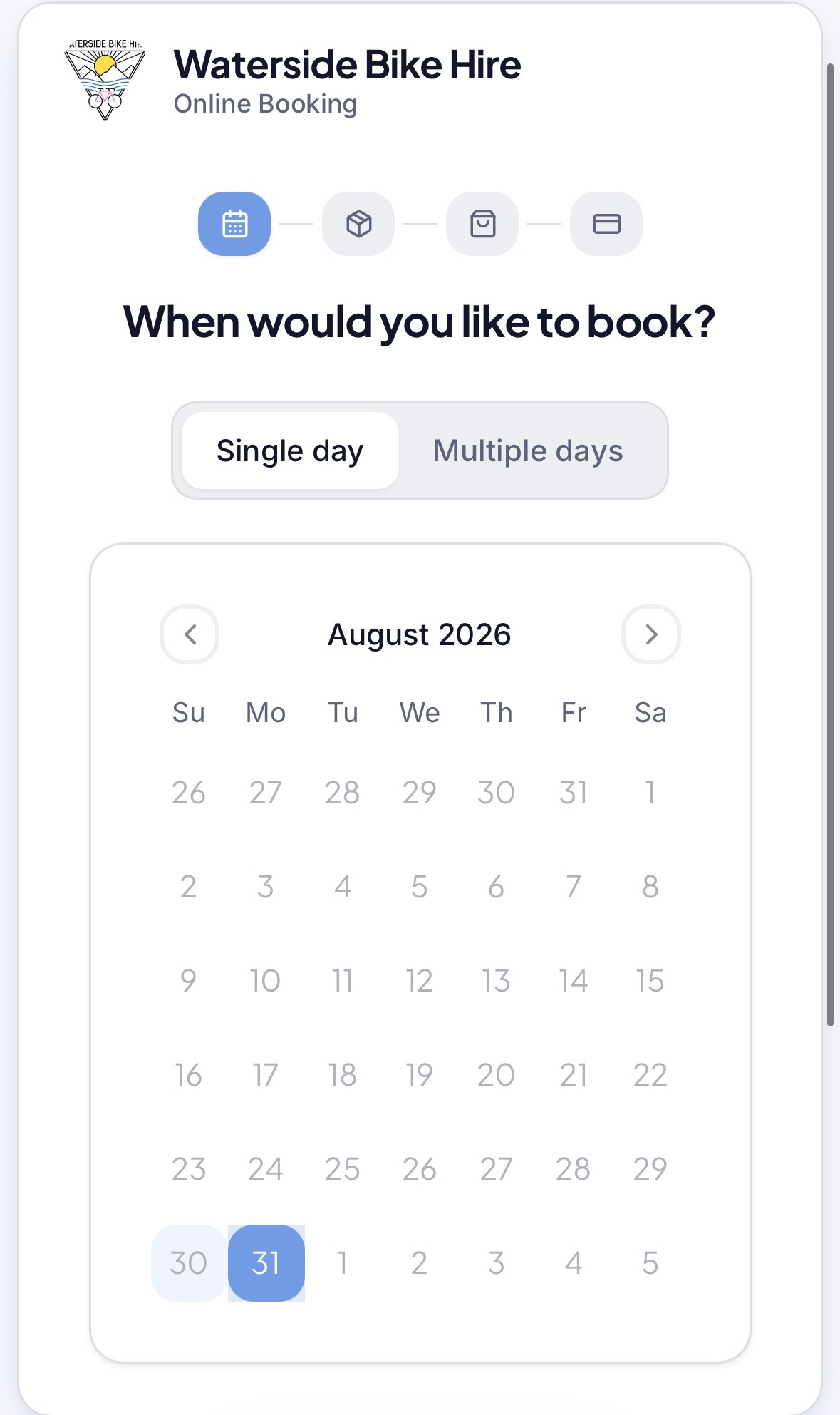
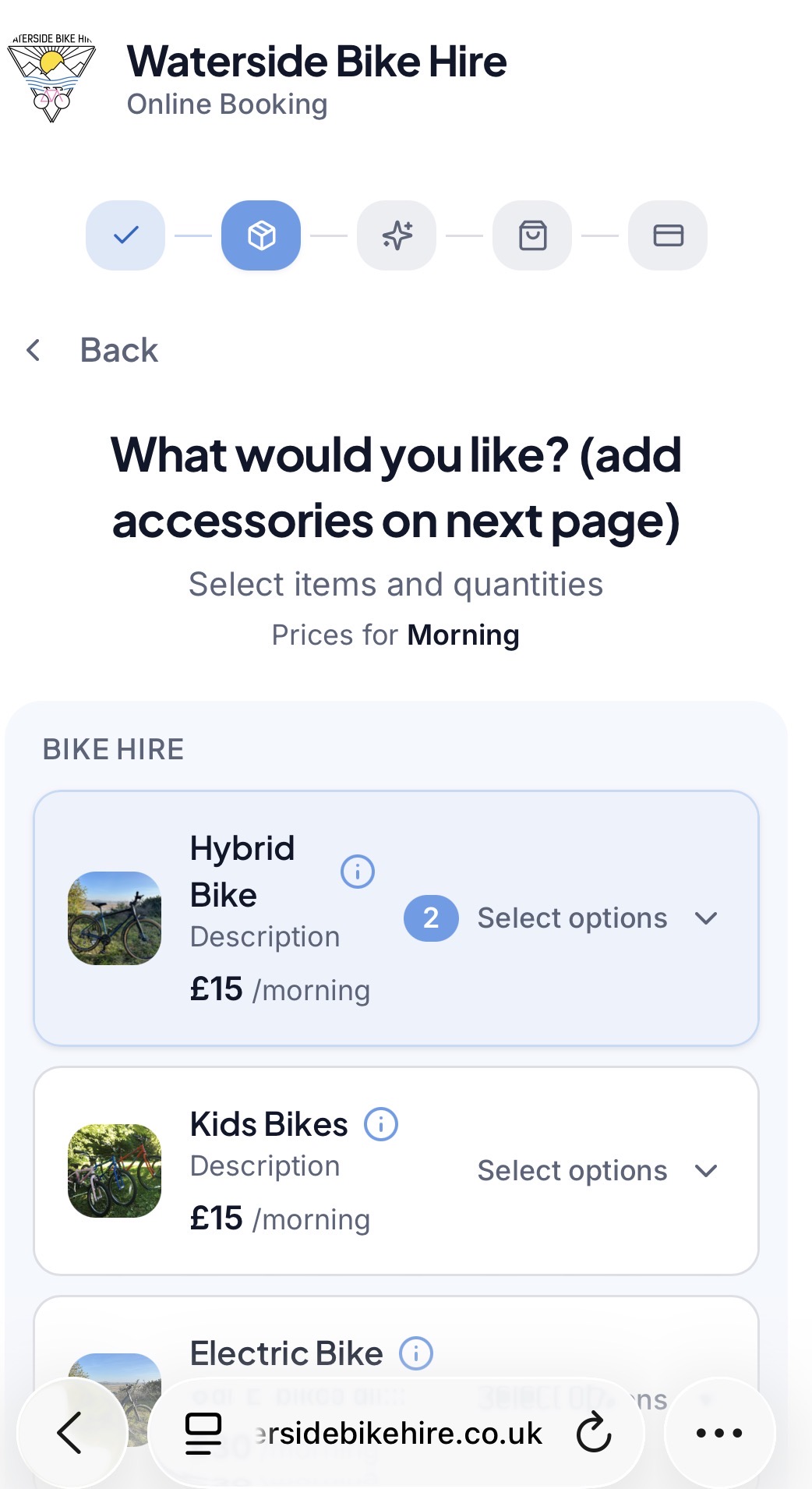
At checkout, riders can sign waivers and, if you want it switched on, pay online there and then — the platform supports taking payment at the point of booking. Waterside itself still takes payment in person on arrival, by choice, but the option to collect it at checkout is there for any business using Zippy that wants it. Group waivers can also be emailed out individually if the group isn't all together to sign at once, so nobody's waiting on someone else to complete the form.
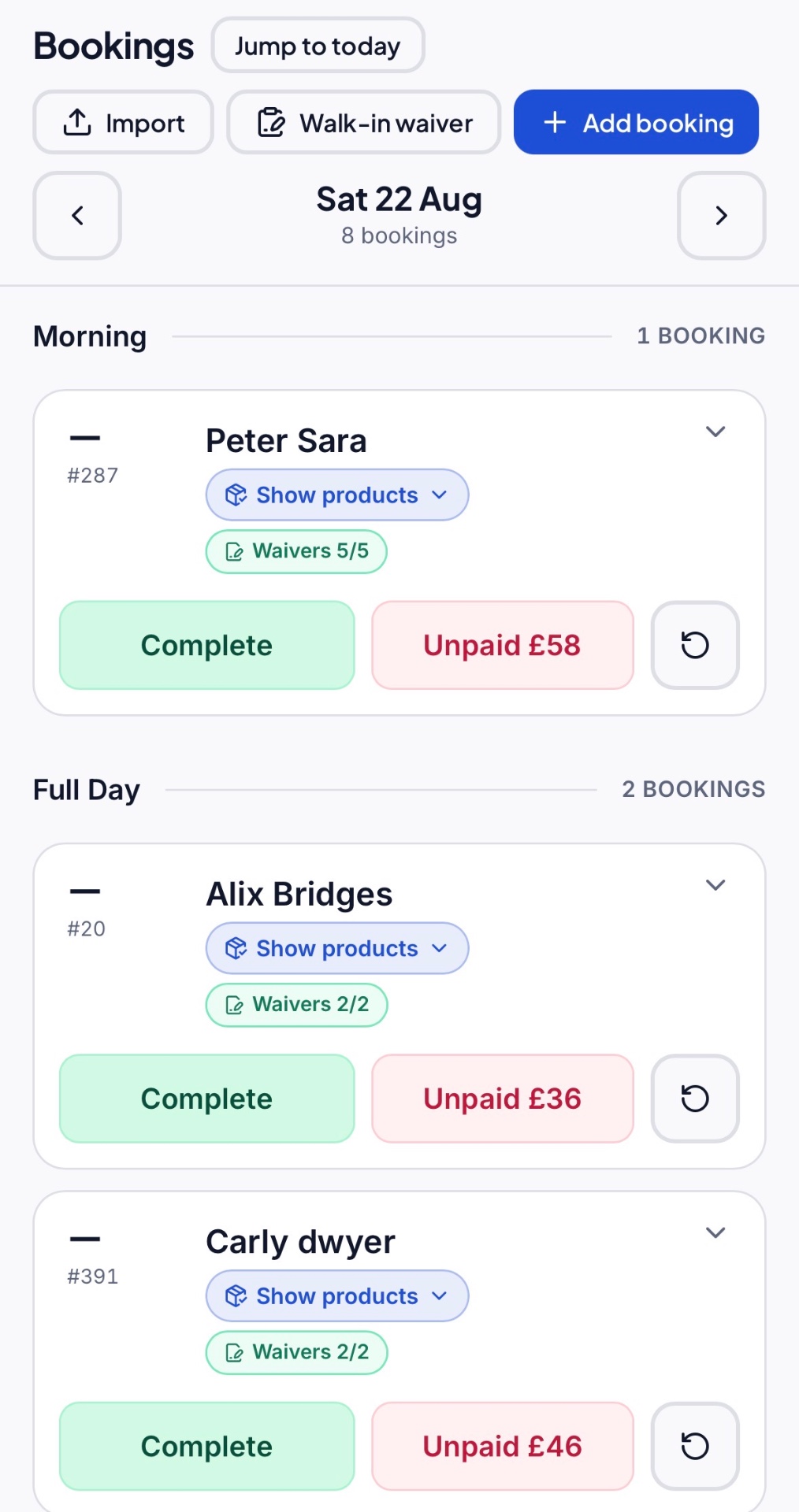
On arrival, everything's tracked against the booking — by booking number or name — with a bike prepared, picked up, and returned each ticked off in turn. That last tick closes out the transaction. Because all the paperwork and payment is already done, the actual handover is short: check helmets are wanted, confirm the waiver's signed, and the group's off.
A deposit can be taken as ID if you want one built into the process. In practice, most of our groups leave their car on site while they ride — not a formal deposit on paper, but it does the same job.
Once a booking's marked complete, it automatically triggers a feedback request email — which matters more than it sounds for a tourism business. Fast, consistent feedback requests are a big part of how Waterside has become one of the leading bike hire venues in North Devon, because it turns a good ride into a Google review while it's still fresh rather than relying on people to think of it later. The same automated-email layer also chases anyone who books but hasn't signed their waiver yet, so it doesn't become a last-minute holdup at the counter.
Stock is handled the same way behind the scenes — you set how many of each bike variation you actually have, so the system can't overbook you, and you can block specific bikes off for specific days if you're closing early or a bike's out of action. Alongside that, the standard listing features: pricing, descriptions, photos. The whole flow is built to be simple enough that customers comment on how easy it was to book — which, for a hire business, is most of the battle.
Dan OS: the admin nobody wants to do
Alongside Zippy Booking, Dan OS handles the parts of running the business that have nothing to do with the customer standing in front of you: email and finance.
For Waterside, emails are read and sorted into the right folders automatically, several times a day, through a scheduled trigger — no one has to remember to go and check. Once sorted, anything that needs a reply gets a question flagged, and the assistant — running on Claude — drafts a reply using the information it has on the business. That draft is never sent automatically. It always goes to me or a member of my team to check before anything goes out.
What makes the drafts actually usable is the knowledge base behind them — a set of documents, kept in GitHub, that describe the business in detail: how the operation actually runs, what things cost, and how we talk to customers (files like tone-of-voice.md and operations-manual.md, alongside pricing and fleet information). Think of it as the document you'd hand a new starter to get them up to speed — except instead of a person reading it once, it's what Claude checks every time it drafts something.
The other time-consuming job in any hire business is logging invoices and receipts. Dan OS pulls supplier invoices straight out of email and matches them into Xero automatically. For the receipts that don't arrive by email — fuel, day-to-day running costs — a photo is enough; the system reads it and logs it the same way.
A day at Waterside
- Prep — about 45 minutes. Bikes get prepared for the day as soon as we're in.
- Check the booking list. Zippy Booking shows who's booked in and what bikes are needed, with a summary at the top of how many of each type to get ready.
- Allocate and label. Bikes are grouped and labelled so they're ready and waiting the moment a group arrives — each one with a puncture repair kit.
- Helmets and waiver check. Helmets are offered free to every rider, and we confirm waivers are signed before anyone heads off.
- Mark prepared. A quick button on the booking screen marks the bikes as ready.
- Mark picked up. One tap when the group takes their bikes and heads out.
- Mark returned. The same tap in reverse when they're back — and that closes the booking out.
Field notes — what fills the gaps
The three-hour window. Once bikes are out, there's usually a window of around three hours before returns start. Staff always have something to do in that time — cleaning bikes, sorting punctures, general tidying — so the quiet period isn't actually quiet.
The mechanical side stays hands-on. Even with everything else systemised, I still do the mechanical work myself — a few hours a week keeping on top of the fleet. Some parts of running a hire business are worth staying close to, not handing off.
What else to think about, beyond bikes and insurance
If you're setting up a bike hire business, the systems above are what tie everything together — but there's a handful of things worth thinking through before any of that matters.
- Bikes for the area. The right fleet mix depends entirely on the terrain and the kind of rider you'll actually get — check what's already nearby and what's missing.
- Location. Somewhere convenient to park, with direct access onto a trail or route, matters more than most other decisions. A café or similar facility nearby is a bonus, not a requirement.
- Business rates. If your property is below a certain size, check with the local council — you're usually exempt from business rates if it's your sole business on the site.
- Insurance. Easier to sort than people expect. A quick call to cover your stock, location, and the security on the building is usually enough to get set up — for us, that's typically worked out around £50–£100 a month, depending on stock levels.
- Card machine. A standalone terminal works, or Zippy Booking links directly with SumUp and Square if you want it built into the booking flow. Either way, check the fees — it's always worth negotiating.
- Branding. Get it right and consistent — it's doing a lot of the trust-building before a customer ever reaches the counter.
Local, or UK-wide
Everything here is what actually runs Waterside Bike Hire day to day, but the same approach scales — I've set this up on a local level here in North Devon and on a UK-wide level through Bike Hire UK, so there's a fair bit of range in what "setting this up properly" can look like depending on the size of the operation.
Bike hire shop FAQs
How many staff do you need to run a bike hire shop?
Far fewer than most people assume. At Waterside Bike Hire in North Devon a small core team covers the day because booking, waivers, payment options, feedback emails and invoice logging all happen automatically before and after the customer is in front of you.
What software do you need for a bike hire business?
A booking system that handles dates, bike variations, stock limits, waivers and payment, plus something to handle email and finance admin. Waterside uses Zippy Booking for the customer-facing side and Dan OS for email sorting, draft replies and pushing supplier invoices and receipts into Xero.
How much does insurance cost for a bike hire shop?
For Waterside it has typically worked out around £50–£100 a month depending on stock levels, covering stock, location and building security. Costs vary by insurer, fleet value and site.
How do you stop a bike hire shop being overbooked?
Set the real quantity of each bike variation in the booking system so it can never sell more than you own, and block specific bikes or dates when you close early or a bike is out of action.
Related reading
- Zippy Booking — the booking platform behind Waterside
- Automation for rental and hire businesses
- Business automation services
- The Brain-Dump Inbox — capturing jobs while you're on the shop floor
If you're setting up a bike hire business — or already running one and thinking there has to be a better way to staff it — get in touch. This is exactly the kind of setup Dan's Systems can help put in place. Get in touch